Showing posts with label Winter. Show all posts

Wednesday, May 29, 2019

Moisture Stains or Dark Stains around the HVAC Vents Covers


Moisture stains around vent cover on Florida ceiling 1homeinspector.com
A lot of homes we inspect in Florida have condensation on the HVAC duct vent covers and moisture stains or mold on the ceiling around the vent.  The cold air from the vent coming in contact with warm air at the ceiling or uninsulated duct boots in the attic causes condensation to form on the vent covers.  Frequently, this condensation causes moisture stains on the ceiling.  The moisture stains can be an ongoing challenge if the cause of the condensation is not addressed. 
The watermarks on the ceiling and the droplets of moisture on the vent cover are likely caused by insufficient insulation on the ducts in the attic, inadequate insulation or uninsulated vent boots, or leaking of hot / warm attic air around the vent boots. 

What is a vent boot?   

The vent boot is the box in the attic that the air conditioning duct connects to on one side.  The vent cover is screwed into the vent boot from the ceiling side. Newer boots are often constructed out of insulation board or duct board. The older types of boots were constructed out of metal.
lake mary uninsulated duct boot in attic 1homeinspector.com 

Random Moisture Stains on your Ceiling

The above picture shows an uninsulated vent boot attached to the HVAC duct. The vent cover connects to the vent boot on the inside of the ceiling. This boot has no insulation, and the joints are not sealed well. The sealant between the boot and the ductwork is leaking, and there is no sealant between the duct and the ceiling. Moisture accumulating on the vent boot drips down until it is absorbed by the drywall ceiling board, causing moisture stains around the vent cover.

People often mistake the dark stains that sometimes form around the vent for mold. The probable cause of the dark stains is the vent boot was not sealed to the ceiling board.  The dust from the attic then sticks to and stains the moist drywall board around the vent cover.

When you see the stains around your ceiling vent covers, you should not ignore them. Water damage is costly to repair, and moist conditions may encourage mold growth.
Longwood HVAC duct joints leaking in the attic - 1homeinspector.com

If you have random stains on the ceiling, it may be the joints that are not sufficiently insulated or sealed.  Moisture stains are visible at the joints of the ductwork in the attic in the picture above.  Condensation forms on the joint and may not evaporate in the attic.  If the condensation continues to drip, it may saturate the insulation and cause moisture stains on your ceiling.
Recommendation:   A Duct Inspection can identify the problem.  We recommend sealing the joints to prevent cooling loss in the attic and random stains on the ceiling.  Sealing the joints will also improve the efficiency of your HVAC system and help reduce your cooling costs.


Main Causes of Condensation at AC Vents

Not enough insulation on the ducts themselves

Cold air traveling through your ductwork in a warm or hot attic forms condensation if the duct is uninsulated or under-insulated. The air ducts in the attic should be well insulated. You should have your air conditioning system and ducts inspected; if it struggles to maintain a comfortable inside temperature on hot days, or you notice condensation on the ceiling or vent cover.
Insulation damaged on Winter Springs HVAC ductwork - 1homeinspector.com

The insulation on the duct above was separated from the duct. Condensation had developed in the duct vapor barrier, and overtime had stained the middle of the ceiling.


Recommendation: Ducts in the attic should be well insulated and in good repair. Damaged or old under-insulated ducts should be replaced. Consider replacing the ductwork in the attic if it is 20 years or older. It will be a good investment that will be easily recovered and will save you money on your future electric bills.

Uninsulated vent ‘boot’

The metal box in your attic that attaches to the duct and the vent cover screws to is the boot.  In Florida, the uninsulated boot in the attic will generate large amounts of condensation due to the cold air in the boot and the hot air in the attic.
Oviedo Uninsulated Duct Boot causes Staining Ceiling - 1homeinspector.com
Above is an uninsulated galvanized duct boot. This boot was cold in the hot attic and caused water to condense on it and drip onto the ceiling.
Recommendation:  We recommend having an HVAC contractor evaluate the condition of the ductwork.  Sealing the duct to vent boot joint and insulating old metal ducts will help reduce condensation around the vents.  Older deteriorated ductwork should be replaced.

Dark Stains around your vent Cover

Dark stains around your vent cover may be mold, but more likely, it is dust collecting on the damp ceiling. The boot should be properly sealed to the ceiling. If not, it will allow attic dust or dirt to leak out of the crack between the ceiling and the vent cover. Sealing the duct to the boot is likewise very important. You may discover a leak where the vent boot attaches to the duct. If not properly sealed, the cold air will leak out. When it meets up with the hot attic air, it forms condensation.


Recommendation:  You should find and seal the leak. If the problem vent is easy to access from your attic, you may be able to fix the problem yourself. We recommend having a local HVAC contractor to evaluate and repair your HVAC ducts.

Covering Stains around the Vent Cover


The dark or water stains around your vent cover are difficult to cover. When the repairs have been made, the ducts have been caulked, and no more condensation is present on the covers, it will be time to cover the stains. 


Normal ceiling paint will not cover these stains. Moisture and dirt stains around the vent cover are resolute stains. Even with multiple coats of ceiling paint, the stains will continue to bleed through the ceiling paint.


Recommendations: We recommend you first cover the stains with two coats of KILZ 2 Multi-Surface Primer & Stainblocker then, paint with your choice of ceiling paint.


Owner / Inspector Frank Carr of First Choice Home Inspections - 1homeinspector.com

Frank Carr is the Owner / Inspector at First Choice Home Inspections in Deltona, FL serving Volusia, Seminole, Orange and Lake Counties. Formerly in the building trades, Frank’s focus is a safe home in the Orlando Metro and Daytona Beach areas of Central Florida and building FCHI. We believe that consumers have the right to expect the highest standards of thoroughness, fairness and effectiveness from their home inspector and that is exactly what we provide.
 
First Choice Home Inspections
Residential Home Inspections in Central Florida
(386) 624-3893 

Saturday, April 13, 2019

Home Construction in Central Florida is Booming

Orlando new home construction was up 51 percent in 2018 compared with the year before.  Construction was led by a surge in apartments but also increases in single family homes, townhouses and condos. Home builders started 16,238 single family homes last year, 12 percent more than 2017. Developers started 12,629 apartments, the most since the Census Bureau began tracking the statistic in 2004.


Orlando home construction is now at the highest level since 2009 when Obama took office. Home sales peaked in 2005 during the middle of the G.W. Bush administration and hit the bottom early in Obama's first term. Sales have since recovered, but are still at levels not seen since the early 1990s when G.H.W. Bush was leaving office.


Building material, skilled labor and lot shortages held new home construction down. Most of the skilled labor were retrained when unemployment peaked in in other fields and did not return when the economy improved.  Builders use of unskilled labor has them spending more time on repairs after the new homes are sold.


Our home inspection schedule has been full in part due to the number of re-inspections required on new home sales. Nationwide there is a labor shortage of 300,000 skilled workers like roofers and framers.


Concentrated urban areas of Orlando are adding homes at the fastest rate. Demand continues to be high in areas such as St. Cloud, Lake Nona, Western Orange County, Western Volusia and Lake County.


Frank Carr is the Owner / Inspector at First Choice Home Inspections in Deltona, FL serving Volusia, Seminole, Orange and Lake Counties. Formerly in the building trades, Frank’s focus is a safe home in the Orlando Metro and Daytona Beach areas of Central Florida and building FCHI. We believe that consumers have the right to expect the highest standards of thoroughness, fairness and effectiveness from their home inspector and that is exactly what we provide.
 
First Choice Home Inspections
Residential Home Inspections in Central Florida
(386) 624-3893 


Thursday, July 27, 2017

Radiant Barriers save Seminole County Homeowners Money

Orlando home inspection radiant barrier

What is a Radiant Barrier? Are they effective at reducing my energy bill?

We, First Choice Home Inspections, inspect a lot of hot dusty attics, some are 165° F. We see all kinds of situations where attic insulation is insufficient, ventilation is inadequate, and rarely find radiant barriers installed in attics. According to the Department of Energy Radiant Barriers work best in hot climates when used in conjunction with sufficient insulation and ventilation. Studies show that radiant barriers can reduce cooling costs 5% to 10%. The reduced heat gain may even allow for a smaller air conditioning system or improve effectiveness of an under rated systems.
Radiant barriers are installed in homes primarily to reduce summer heat gain and reduce cooling costs. Radiant barriers do not reduce heat conduction like thermal insulation materials. The barriers are comprised of a highly reflective substrate or foil that reflects radiant heat rather than absorbing it.

Heat Transfer

Like a cool spoon in cup of coffee conducts heat through its handle to your hand; heat travels from a warm area to a cool area by a combination of conduction, convection, and radiation. Heat flows by conduction from a hotter location within a material or assembly to a colder location. Heat transfer by convection occurs when a liquid or air, becomes lighter and rises. When liquid or air cools, it becomes heavier and falls. Radiant heat moves from hots surfaces and is absorbed by cooler materials or air. A car parked in the sun will absorb the radiant heat into the cars finish and transfer the heat thru the metal into the interior where it heats the air inside the car.

How Radiant Barriers Function

Most insulation materials work by slowing heat transfer. Radiant barriers and reflective insulation systems are designed to reduce the transfer radiant heat. Radiant barriers must have an air space to work. Radiant barrier are less effective when installed horizontally. Dust accumulation on the reflective surface reduces its reflective properties.
As the sun heats your roof, it makes your roof hot. The heat travels through the roofing materials to the attic side of your roof. It radiates the increased heat energy onto the cooler attic materials, the air conditioning ductwork and the ceiling of your home. A radiant barrier reduces the radiant heat transfer from the underside of the roof to the other surfaces in the attic.

Radiant Barriers help air conditioners cooling capacity

Radiant barriers are more effective in hot climates than in cool climates, especially when cooling air ducts are located in the attic. Some studies show that radiant barriers can reduce cooling costs 5% to 10% when used in a warm, sunny climate. The reduced heat gain may even allow for a smaller air conditioning system. In cool climates, however, it's usually more cost-effective to install more thermal insulation than to add a radiant barrier.

Frank Carr Home Inspector First Choice Home Inspections
Frank Carr is the Owner / Inspector at First Choice Home Inspections in Deltona, FL serving Volusia, Seminole, Orange and Lake Counties. Formerly in the building trades, Frank’s focus is a safe home in the Orlando Metro and Daytona Beach areas of Central Florida and building FCHI. We believe that consumers have the right to expect the highest standards of thoroughness, fairness and effectiveness from their home inspector and that is exactly what we provide.
 
First Choice Home Inspections
Residential Home Inspections in Central Florida
(386) 624-3893 

Sunday, November 27, 2016

Lake Mary Fireplaces, Furnaces and Heater Safety

It is approaching that time of year again when we will be firing up our heaters, fire places and furnaces.  Have you had your annual maintenance checkup or your fireplace chimney inspected and cleaned?  These are important things to consider, but did you forget to check your batteries in your smoke and CO alarms.  Most homes have smoke alarms (detectors); more than 33 percent of these homes are not protected because the smoke alarms don’t work.  When a smoke alarm fails to work, it is frequently because the batteries are missing. People often remove or disconnect batteries to prevent nuisance activation caused by bathroom steam or cooking vapors.  Was your smoke alarm on a recall list?

Smoke and Fire

Most fire deaths occur in the middle of the night.   No smoke alarms were present or they did not operate in nearly 75% of residences where a fire fatality occurred, according to FEMA statistics.  A smoke alarm is the most valuable life saving device you can have in your home.  An operable smoke alarm will reduce your chances of dying in a fire, nearly in half.  Smoke alarms are designed to detect and warn that silent, but deadly smoke is in the air. The early warning will wake you and your family, allowing time to escape your burning home.
At 40 percent, cooking is the leading cause of residential structure fires. Heating causes another 14 percent. These percentages (and those that follow) are adjusted, which proportionally spreads the unknown causes over the other 15 causes.
The two leading causes of residential fatal fires are smoking, at 18 percent, and other unintentional or careless actions, at 14 percent. The leading cause of residential fires that result in injuries is cooking (26 percent), followed by other unintentional or careless actions (11 percent) and open flame (also 11 percent). Cooking is, by far, the leading cause of fires with property loss, at 20 percent.1
1  U.S. Fire Administration/National Fire Data Center, Fire in the United States 2003-2007 Fifteenth Edition

Carbon Monoxide

People are at an increased risk of carbon monoxide poisoning during the winter months. Well-insulated, airtight homes and malfunctioning heating equipment can produce dangerously high and potentially deadly concentrations of carbon monoxide.
Carbon monoxide is a by-product of incomplete combustion, any fuel-burning appliance, vehicle or tool that is inadequately vented or maintained can be a potential source of carbon monoxide gas.
Examples of fuel- burning equipment include: 
  • Fuel - furnaces and space heaters. 
  • Propane or Gas - fireplaces, (both vented and ventless), space heaters, ranges and ovens, clothes dryers, grills, smokers, and deep fryers.
  • Wood burning fireplaces and stoves 
  • Charcoal grills and smokers 
  • Gasoline – automobiles, lawnmowers and power tools
Gas fireplaces are gaining in popularity based on their low cost, convenience and relative ease of installation.  Ventless or vent free gas fireplaces are not vented to pipes or chimneys. The burned gases including carbon monoxide are put into the circulation of the air within your home.  Based upon the health risks associated with the use of ventless gas fireplaces, their installation is illegal in many areas of the country.
Prevent or minimize the potential for exposure to carbon monoxide gas. 
  • Have your home-heating systems, fuel-burning appliances, flues and chimneys inspected, cleaned or schedule an annual home checkup by a qualified home inspector. 
  • Make regular visual inspections of fuel-burning appliances such as your gas dryer and hot water heater. 
  • Do not burn charcoal inside a home, cabin or camper.
  • Do not operate gasoline-powered engines (generators, cutting saws) in confined areas such as garages or basements. 
  • Do not idle your car inside the garage. 
  • After a hurricane or storm, make sure vents for the gas dryer, furnace, stove and fireplace are clear of debris and intact. 
  • Never use gas ovens and ranges to heat your home!
Check your Smoke and CO alarms frequently.  Smoke alarms are set off by bathroom steam or cooking vapors. Rather than take the battery out of your alarm, do the following: 
  • Quiet the alarm by pushing the “HUSH” button, if equipped. 
  • Open windows and turn on vent fans to clear the air.
  • Consider relocating the alarm farther away from the cooking area or bathroom.
  • Consider installing a photoelectric or combination photoelectric/ ionization type alarm. The photoelectric and combination type alarms are less sensitive to cooking smoke.

Causes of Christmas Fires

Cooking, heating, and open flames are the major cause of Christmas fires, according to the US Fire Administration.  This is not surprising due to holiday cooking and the more prevalent use of home fireplaces, displays, and decorations involving candles.  The daily incidence of candle−started fires quadruples on Christmas Day.
home inspection, fire, home, home inspector, Lake Mary, FL, Seminole County, Florida, Debary, Orlando, Longwood, Sanford, Oviedo, Winter Springs, Wekiva Springs,

Opinions of a Home Inspector

Christmas is the time to spend with your family and friends, not to worry and agonize if you will have a fire.  Every Christmas the sounds of fire engine sirens overpower my family’s holiday music.   We often worry if the sirens are for one of our friends or neighbors.  You should have all your heating and cooking equipment inspected and serviced before your family arrives.  Fireplaces should be inspected yearly and cleaned regularly.  Be aware of the placement of candles and decorations.  Make sure you give your live Christmas tree plenty of water and keep it away from candles and fire places.  May your Christmas be worry free and full of holiday cheer.


Frank Carr is the Owner / Inspector at First Choice Home Inspections in Deltona, FL serving Volusia, Seminole, Orange and Lake Counties. Formerly in the building trades, Frank’s focus is a safe home in the Orlando Metro and Daytona Beach areas of Central Florida and building FCHI. We believe that consumers have the right to expect the highest standards of thoroughness, fairness and effectiveness from their home inspector and that is exactly what we provide.
 
First Choice Home Inspections
Residential Home Inspections in Central Florida
(386) 624-3893 

Sunday, July 31, 2016

Seminole County Home Inspection, Lake Mary


Best Home Inspection (386) 624-3893
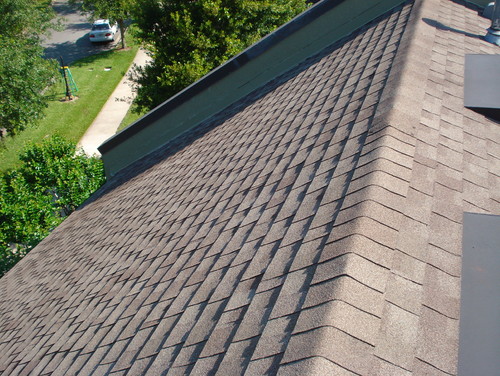
We walk the roof!  There is only so much information you can glean from a
photo.  Drones can not touch or feel the roof or structure. Our inspectors are
trained to inspect all types of roofing including tile and slate.
Now you can put our outstanding reputation for service and reliability to work for you. By contracting the premier Seminole County Home Inspector, First Choice Home Inspection, you benefit from experienced Central Florida home inspectors that deliver computerized reports using the latest technology.  Our reporting system meets and exceeds the state standards. We provide inspection services for residential home,  mobile home or condo buyers,  villa and vacation home owners as well as pool inspection and insurance inspection services in Oviedo and Central Florida.  We encourage your presence during the inspection. By being present at the inspection, our professional home inspector can familiarize you with the home and explain things to you as they progress through the inspection.


Seminole County Home Inspectors

First Choice inspectors are bound to a strict code of ethics; this ensures quality service while providing important protections. For example, our inspectors must:

·         Work Exclusively for the Customer
·         Follow Nationally Accepted Standards of Practice
·         Do Not Perform Repairs on Any Property Inspected

Our inspectors are AHIT and InterNACHI certified in addition, they are familiar with a wide variety of situations. We believe that consumers have the right to expect the highest standards of thoroughness, fairness and effectiveness from their home inspector and that is exactly what we provide.
Best Orlando Home Inspector
Orlando & Central Florida Home Inspection


Seminole Home Inspection Services:

Schedule an Inspection call:  (386) 624-3893

* All WDO Inspections are performed by a Licensed Termite Inspector that may or may not be an employee of FCHI.


Frank Carr is the Owner / Inspector at First Choice Home Inspections in Deltona, FL serving Volusia, Seminole, Orange and Lake Counties. Formerly in the building trades, Frank’s focus is a safe home in the Orlando Metro and Daytona Beach areas of Central Florida and building FCHI. We believe that consumers have the right to expect the highest standards of thoroughness, fairness and effectiveness from their home inspector and that is exactly what we provide.
 
First Choice Home Inspections
Residential Home Inspections in Central Florida
(386) 624-3893